Living a Biblical Christian Life in the Military

If you think or believe that your struggles are more challenging than anyone else, you are mistaken!
Living a biblical Christian life is difficult no matter what your circumstances are. Whether you are working at a law firm, construction worker, CEO of a corporation, or pastor, a biblical Christian life is hard to live. I believe it is essential to explain why I am using the term biblical Christian. From experience, I know that many people who claim to be Christians do not define Christianity the same as I do. Some people claiming to be Christians do not entirely follow the Bible. They use the Bible more like a book for life guidance. A biblical Christian believes the Bible is inerrant and infallible. In other words, the Bible does not contain errors and is not wrong in any way. Another way to put it is that the Bible is the foundation and source for absolute truth. Since the term biblical Christian is now defined for this blog, I will simply say Christian moving forward.

Throughout the Bible, one can see the difficulties people faced when living a Christian life. We are no different. There seems to be a misconception that being a Christian in the military is exceptionally different than living such a life in any other career or lifestyle. Of course, it has some unique aspects. Nonetheless, the difficulties are the same as in any other occupation. So, with what does the average Christian contend?

It is challenging to live a Christian life because we are all sinful creatures. Starting in Genesis, Adam defied God and ate from the tree of the knowledge of good and evil. It has been downhill ever since. Adam caused all of humanity to be born with a sinful nature. The consequences of his actions are why we now struggle with things like selfishness, pride, and lust. We battle daily to avoid these things and have a God-focused life, even as pastors and chaplains.

If you think or believe that your struggles are more challenging than anyone else, you are mistaken! Let me clarify that statement. If we decide to accept Jesus Christ as our Lord and Savoir at some in our lives, we all start as immature Christians. We begin to read the Bible and live our lives based on what we learn. However, our understanding is limited because we are just starting the journey to becoming mature Christians. Typically, this is one of the most complex parts of the Christian journey. With the help of the Holy Spirit, we have to change almost everything in our lives completely. Eventually, we find our new standard with our new life in Christ. With the new life, some old sinful habits fall away. However, some remain. In essence, your life is easier because you have shed some sinful habits and are making better decisions, but the desire to sin remains.

How does one face the challenges of sin? Read the Bible and grow in spiritual maturity. The key to living a Christian life in any circumstance is studying the Bible and applying its teachings to your life. When I say study, I mean a deep daily dive into God’s word, the Bible. You should be spending a minimum of thirty minutes a day reading and studying the Bible. Psalm 1:1-3 states, “Blessed is the man who walks not in the counsel of the wicked, nor stands in the way of sinners, nor sits in the seat of scoffers; but his delight is in the law of the Lord, and on his law he meditates day and night. He is like a tree planted by streams of water that yields its fruit in its season, and its leaf does not wither. In all that he does, he prospers.” Joshua 1:8 states, “This Book of the Law shall not depart from your mouth, but you shall meditate on it day and night, so that you may be careful to do according to all that is written in it. For then you will make your way prosperous, and then you will have good success.” The success spoken of here is the success in following God’s laws and defeating sinful temptations in your life. If you are not studying God’s word daily, you are doing the equivalent of going into battle without a weapon; it is impossible to please God and live a Christian life without studying the Bible.

If you would like to begin studying the Bible and maturing spiritually, I recommend getting John MacArthur’s Study Bible to help you in your studies. The MacArthur Study Bible has commentary (notes) on the bottom of the page explaining the scriptures in detail. He reviews the settings of the books and provides word studies so you can know what selected words mean in the original Greek language. This Study Bible will jump-start your study beyond what you could ever imagine. You can purchase it on Amazon. In addition, the Navigators organization offers a free e-book entitled: How to Study the Bible (see order website below).

Amazon Link:


Navigators Link:

https://www.navigators.org/mk202109-how-to-study-the-bible/?
Interacting With Close Friends From Differing Religions

You don’t have to lose your friends because of differing religions.

One of the hardest things to do in one’s lifetime is deal with rejection from a close friend or loved one. Why? Because there are attached with deep connections and emotions with our best friends and esteemed loved ones. We spend a quarter to half of our lives with some of those people, sometimes longer. By default, we get our identity from our family and those with who we have spent the most time. Think about you and who you are. What are your favorite things to do? Are they the same things you did with your family or high school friends? What are your core beliefs? Do they closely match those of your family? Our family and friends shape and mold us into who we are as adults. Then, as adults, we find friends that closely match our own beliefs and personality. We find comfort and security in like-minded people. We seek people who make us feel comfortable and relaxed. Why else does society form “cliques”? When God created humanity he created us to seek acceptance from others naturally. Our adult friends represent and are a model of our family and childhood friends. Therefore, when friends reject us, we are deeply hurt.

            Those who decide to join the military find themselves in a unique position. Upon placement in the military, we are stationed with a large variety of people from differing backgrounds. From Basic Training to our last duty station, we are with people from all around the world with different worldviews and life experiences. Of course, some of those have experiences and points of view that closely resemble ours. However, we are also forced to interact with many others from vastly differing backgrounds. There are several significant advantages to working closely with people different from you. First, you have the chance to explore and understand other points of view better. Second, you get the opportunity to reevaluate your own ideals and values. Frequently, service members find that our families were misinformed and possibly incorrect in their beliefs and practices. Often service members realize that we have much in common with our co-workers despite their varying backgrounds. However, sometimes our differences are so incompatible that they become barriers to friendships and working relations with others. So what do we do when this happens?

            How do we deal with friends or co-workers that have different religious beliefs than ours? We should do the same things when any other differences are incompatible with our own, and they create barriers to friendships and working relations with others. The ideal situation is that the two people understand that the differences are just that and nothing more than differences. The two must realize that they can disagree and continue working together. Given time and patience, the two individuals define their relationship through discussions. Together they come to a mutual understanding of what limits and restrictions define their relationship. Ideally, this would naturally occur. Sadly, it rarely does. We must help the process of understanding.

            The most crucial moment in ironing out differences is, what I call, the Differences First Impression. When you first meet someone, the first impression is a significant one. Similarly, the impression left with someone following your first disagreement will set the tone for all future engagements. You will find that it is challenging to overcome the Differences First Impression. Why? Because you may have just challenged their family’s, friends,’ and own belief system. You have hit a very emotional spot for them.

            Not to fear. You have some control over the Differences First Impressions. Therefore, I have developed the following initial steps in developing a good Differences First Impression. Most people make a huge mistake when first confronted with differing opinions. They become defensive. People do not like their ideals challenged, so they immediately get defensive without thinking. It just POPS and happens. Before they know it, the discussion explodes and spirals out of control. I am not necessarily saying they are yelling and cussing at each other, though it often happens, especially in the military. However, the discussion is less than cordial, and the two are left with hard feelings.

Therefore, a first step in avoiding a negative Differences First Impression following a disagreement is not to allow yourself to become defensive. Ecclesiastes 7:9 states, “Be not quick in your spirit to become angry, for anger lodges in the heart of fools.” Getting defensive in a discussion incites defensiveness in the other person. Further, Proverbs 15:1-4 states, “A soft answer turns away wrath, but a harsh word stirs up anger. The tongue of the wise commends knowledge, but the mouths of fools pour out folly. The eyes of the Lord are in every place, keeping watch on the evil and the good. A gentle tongue is a tree of life, but perverseness in it breaks the spirit.” Initially, remaining calm will be difficult, but it will get easier with practice.

            One of the main ways to keep from getting defensive is to listen. Listening gives the other person the opportunity to explain their beliefs and you the chance to gain a new understanding. James 1:19 states, “Know this, my beloved brothers: let every person be quick to hear, slow to speak, slow to anger.” It is vital to listen to the person speaking. Have you ever talked with someone who seemed to be listening to you; however, when you finished talking, you realized the person wasn’t listening at all? They were merely waiting for you to be quiet, so they could tell you what they wanted you to hear? How did that make you feel? Were you willing to continue the conversation? I wouldn’t be. However, I have been in some talks where the other person has sincerely listened. In those instances, the person made me feel valued, and I was more willing to continue the discussion and open up. Moreover, I was more inclined to hear the other person out. Genuinely listening lets the other person know you truly desire to understand them.

            There is always an anomaly, something that is abnormal or outside of the normal parameters. There will always be someone who, no matter what, wants to argue or disagree. You could avoid being defensive and genuinely listen for hours and hours and still not get a positive response from this person. How do you interact with an argumentative person? You don’t. Instead, you leave them alone. Trying to talk with a truly confrontational person is a waste of your time. Romans 12:18 states, “If possible, so far as it depends on you, live peaceably with all.” Note the verse says, “If possible…” Sometimes it is not possible to be peaceable with someone. In that case, the best thing you can do is show the person grace and love just as Christ did for you. Be kind and cordial in all of your interactions with the person, and leave it there. The person may come around, but don’t be dismayed if it doesn’t happen. Do what you can to live peacefully and leave the rest to God.            

I hope the concepts above will help you approach conflicts in healthier ways. If you would like to know more about conflict resolution, I highly recommend Ken Sande’s book, The Peace Maker: A Biblical Guide to Resolving Personal Conflict.  [https://www.amazon.com/Peacemaker-Biblical-Resolving-Personal-Conflict/dp/0801064856]

Life as an Army Chaplain

“Best Job in the World”

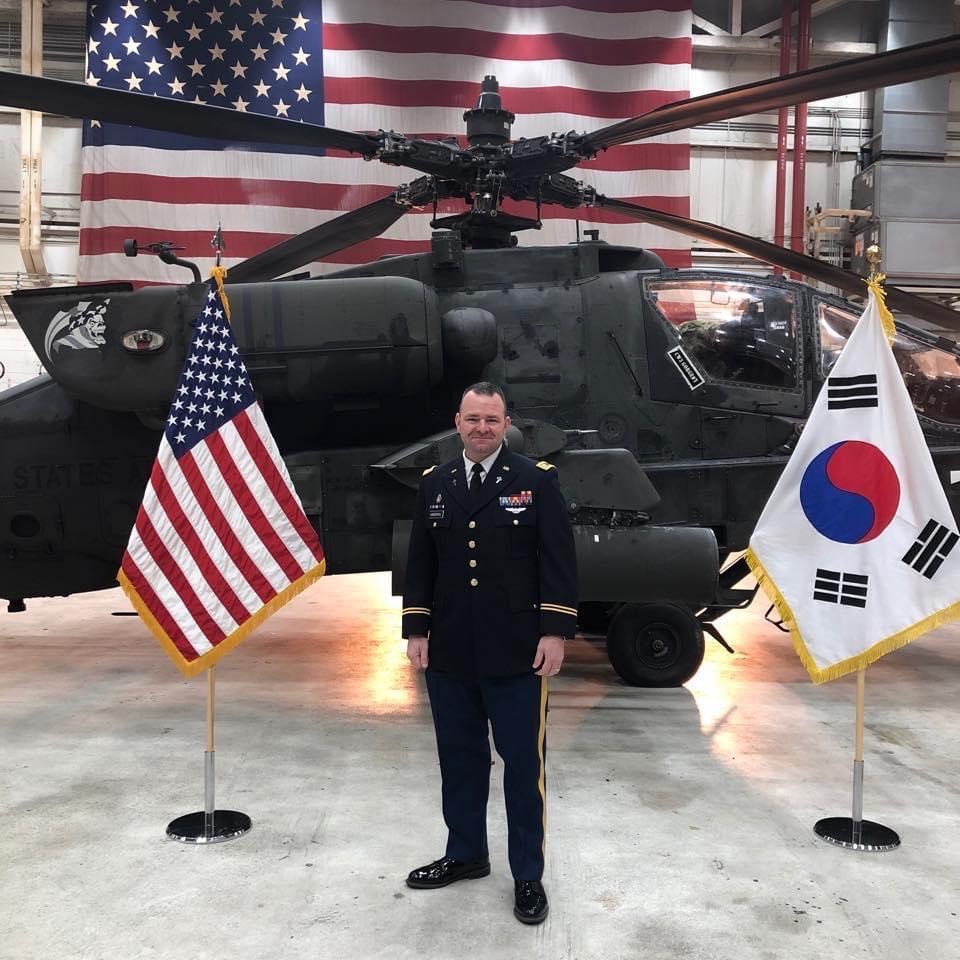
CH Underhill during his time with the 4-2 Attack Battalion
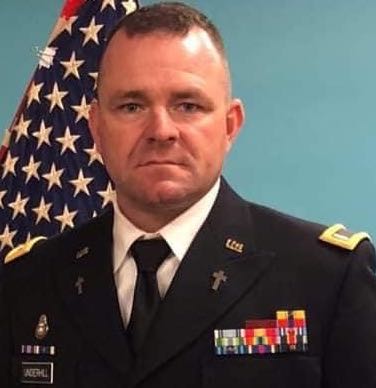
CH Underhill

           I have been an Army chaplain for four years. I have had two duty stations in those four years as a chaplain. I am often asked what is it like to be a chaplain. I am asked this question by a variety of people, including the soldiers to whom I minister. The first step in becoming a chaplain is to graduate from the Chaplain Basic Officer Leadership Course (CHBOLC). CHBOLC consists of 64 training days, excluding weekends and federal holidays. The course teaches you the basics of how to be a soldier and how to be a chaplain. Soldiering skills include, but are not limited to, how to march, how to do formations, proper courtesies to superiors, and proper wear of uniforms. Concerning chaplaincy, the course teaches you how to write reports, how to help soldiers in a religiously diverse Army, and the chaplain’s role in staff meetings, advising commanders, and conducting military funerals and memorials. The course builds a foundation for new chaplains to stand on once they graduate and are placed with their new unit after graduation. However, like any foundation, a building must also be constructed on it. Chaplains will continue to build on the foundation at each duty station to which they are assigned. And each duty station will mold the chaplains in very different ways.

            Chaplains are like snowflakes. No two chaplains are alike. Every chaplain has their own way of ministering to their units. This is because God has made every person different. Additionally, his or her situations and leaders at each duty station develop each chaplain differently. As for me, I have an additional layer, which makes me unique. I am a mustang officer. A mustang officer is an officer who was previously enlisted. Typically, mustang officers have about four to six years, one tour, of enlisted experience. In my case, God allowed me to have a little over eighteen years of enlisted experience prior to becoming a chaplain.

            As stated earlier, my experience as a chaplain began with attending CHBOLC, which was a challenging experience for me. The experience was not hard physically or mentally. Because of my prior enlisted experience, I knew a lot of what was taught before taking the course. CHBOLC was hard for me because I had to work with people I didn’t understand. Additionally, I had to work with people who completely frustrated me personally. For the first time in my career, I had to work with people who saw the world completely differently than me. For the record, I still struggle with this difference of worldviews.

            After CHBOLC, I was stationed at Fort Benning and assigned to the 2-15 Calvary Scouts unit (2-15 CAV). The 2-15 CAV is a Basic Training unit that trains new recruits for the Army and the Cavalry. Like you see in movies when someone first joins the military, I worked within an environment of scared young people with newly shaved heads and drill sergeants yelling at them. Therefore, my experience as a chaplain at Fort Benning was mainly shaped by my interactions with Basic Trainees. The biggest challenge I faced with 2-15 CAV was sympathy fatigue. Sympathy fatigue is a lack of sympathy for suffering due to continuous exposure to those in need.

            At Basic Training, chaplains deal with two significant issues. First, chaplains are asked how the “real” Army is and what advice we have for when the trainees reach their duty station. This is a valid concern considering the trainees just left everything they know behind and are now going through one of the most challenging times of their lives. They want to know whether the experience is worth it and how to succeed where they are going. I loved answering these questions. Who wouldn’t love teaching others from their own successes and failures? I passed on everything I could to these trainees.

            The second issue chaplains face are trainees who, as the Army says, “fail to adapt.” These trainees have never been taught how to cope with stress. It is essential to clarify how I am using the word stress. Stress in this sense is anything that challenged them, and I mean anything. These trainees had it made at home and failed to realize it until they reached Basic Training. After eighteen years of military service and several deployments under my belt, I found it extremely difficult to minister to these trainees, especially after dealing with them a year and a half in the unit. One concern with these trainees that really bugged me was when I would get an “emergency” call from a Drill Sergeant saying a trainee stated they needed to see me immediately. I would rush to see the trainee. When I got there and began talking to the trainee, I would discover that he was distraught because his girlfriend had broken up with him in a letter. The first time I heard this, I was very compassionate and understanding. However, over time, I would discover, for example, that the trainee had been dating the woman for only one, two, or maybe three months. After three months of dating, this trainee’s life was now completely over? After a while, I began to tell my trainees this, “Hey man, look. This is a good thing. If she can’t stay with you through Basic Training, she was never going to stay with you through your deployments and many other pieces of training. I suggest the next time you get a chance to go to the store, buy a thank you card, put forty bucks in it, and write, ‘Thank you for breaking up with me. Here is forty bucks for your next date. Hope it goes well.’ Send it to her and move on with your life. Trust me man, you have a lot more stuff to do and a whole life to live. You will find someone who loves you and will stick with you through all the hard times.” Believe it or not, it worked very well. (Perhaps, however, we could have been a bit more sensitive to the young lady on the receiving end. Sympathy fatigue was a major battle for me at Fort Benning.)

            After Fort Benning, the Army stationed me at Camp Humphreys, South Korea, with the 4-2 Attack Battalion (4-2AB). I am currently still in this unit. The 4-2AB is an Apache Attack helicopter unit. The soldiers here have graduated from Basic Training and are no longer trainees. Their experience ranges from this being their first duty station to having over twenty tears of military experience. At this point, I now have more than twenty-two years of military experience. I have one constant issue here with the soldiers at 4-2AB; people miss their families. It does not matter if this is their first duty station or their tenth; being thousands of miles away and not being able to talk with loved ones when they want takes a toll on them. Add the isolation of COVID, and people begin to get incredibly lonely. The loneliness leads people to make poor decisions like engaging in excessive drinking and exercising poor money management. These actions incur severe consequences.

            So, what does a typical day look like as a chaplain in the Army? I have no idea. There is not a “typical” day as a chaplain. I can plan as much as possible, but plans rarely pan out. I get counseling calls at all hours of the night and day. Some days I will get no counseling requests, and some days I will have ten counseling sessions. On other days, I will be supporting a unit with a suicide or planning a memorial for a fallen soldier in my unit. If I am lucky, I will get one thing I planned completed. This is true no matter where I am stationed. All chaplains know that the only thing certain is uncertainty. Do you remember me saying that I like a challenge? Do you think I enjoy the constant change and uncertainty? YOU BET I DO! Add that I get to minister to some of the best people in the world. I would not change anything. I thank God for every day He allows me to be an Army Chaplain.

Chaplain Underhill

“Life Experiences and Spiritual Journey”

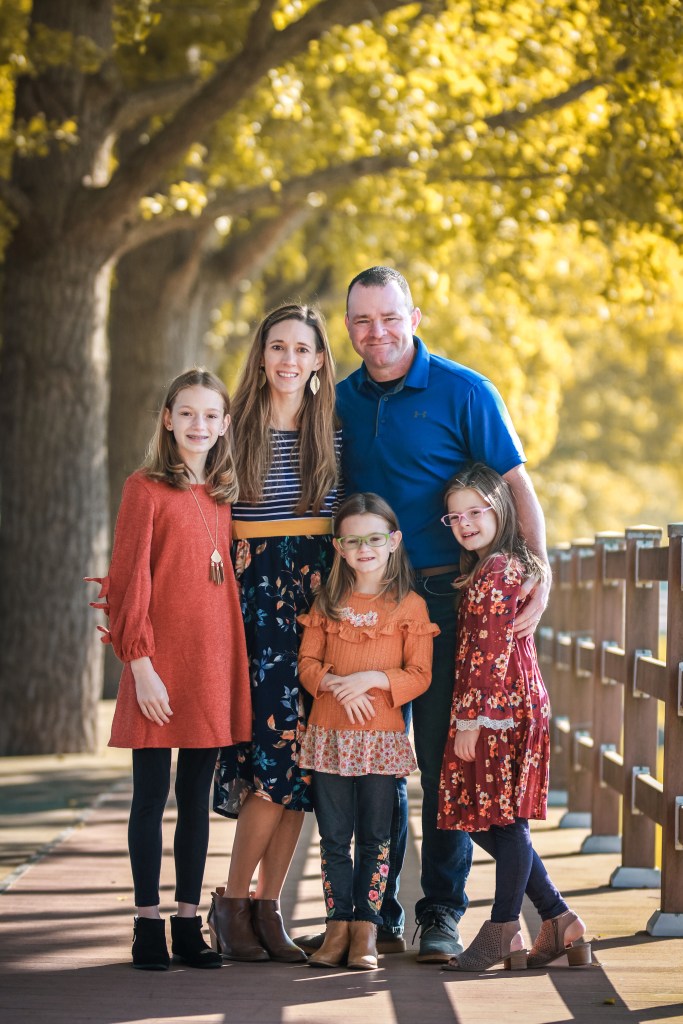
CH Underhill and his family.

Personal Introduction

Greetings! I hope you are well. I am Chaplain Underhill, founder of Fire Teams men’s ministry at Camp Humphreys, South Korea. Fire Teams is a men’s ministry geared towards soldiers between the ages of eighteen and twenty-five. I assume, since you are reading this blog post in particular, you would like to know about me, so let’s get started. I am forty-five years old. I have been married to my wonderful wife, Megan, for thirteen years. We have three daughters: Bella (11), Chloe (9), and Delia (7). I am currently a Chaplain in the U.S. Army. I have served in the military for over twenty-two years in three different branches (U.S. Air Force, Navy, and Army) and in six different MOSs (jobs). My civilian jobs are too numerous to account for in this forum. You are probably wondering how I have managed to have this much change and transition throughout my life. Fun story! Let’s start with my childhood.

            I was born and raised in North Carolina. I would say we were lower middle class. We lived in a rural area with tobacco, cotton, and sweet potato fields. At the time, the nearest town was about a thirty-minute drive. The closest city was about an hour’s drive. So we were rural, but we did venture to the malls and big department stores every now and then, even if we were just window-shopping. However, until we could drive, my friends and I spent most of our time scouring the countryside looking for adventure and anything that posed a challenge. NOTHING was too big, scary, or dangerous for us to take on. Except for snakes, bats, big dogs… and the old man in the white house on the hilltop who was weird, always watching us, asking what we were doing, and telling us to stay away from his apple trees. However, I had one main issue that overwhelmed me for years, which I will address later.

            My best friends were Wesley and James. I had other friends, but most of my time was spent with Wesley and James. We loved taking on challenges together, whether it was building a treehouse, building rope swings for the creek, or digging trenches to combat a pretend invasion from some imaginary enemy force. As we grew older, we began to move on to building go-carts, four-wheelers, dirt bikes, and, of course, cars. Throughout our childhood, we would overcome challenge after challenge. We thoroughly enjoyed learning and progressing to new things.

            My childhood played an essential role in my military career. The principles and attitudes I developed prepared me for the challenges of the military. In fact, my childhood is why I thrive in the military. The military offers new challenges every day and new places to see! The military is the perfect place for my conquering, adventurous spirit. Of course, it has had its downs, but no one wants to talk about the downs. As stated previously, I have served in three different branches and had six different jobs. It’s amazing what you can do if you don’t think about the difficulties and just say yes to every opportunity! As I haven’t stated what my six jobs were, here they are. I have been a: C-130 Mechanic (Air Force); C-9 Loadmaster (Navy); C-130 Loadmaster (Air Force); C-130 Crash and Recovery (Air Force); Chaplain Assistant (Air Force); and presently, Chaplain (Army). Yes, I enjoy a challenge! I have traveled the world three times over and had extensive training. In fact, I would say that over half of my career has been in training. However, I had one main issue that overwhelmed me for years. Remember the issue I spoke of earlier? It stayed with me until about five years before leaving the Air Force. The issue was that I knew something was missing from my life. Specifically, Jesus Christ was not a part of it. I knew that God wanted me to give up my life of sin and follow Him. Yet, I refused to.

            So, how did I get to where I am today? It was a long journey with many people involved. Throughout my childhood, my parents attended church. I received a biblical understanding and foundation during those years. As I grew up, I abandoned the church for two main reasons. First, although my parents went to church, they did not live a Christian life. I didn’t understand why they bothered to attend church if they didn’t really believe what was preached. After all, they should live it if they believed it, right? Second, many church people hurt me in my teen years. The hurt caused me to have a highly negative view of religion. Yet, I still had a longing and a deep burden to follow God and accept Jesus Christ as my Lord and Savior.

            The long journey started while I was a child attending church with my parents. However, the journey got interesting when I began attending a church in Fuquay-Varina, NC, named Fellowship Bible Church. When I first started attending Fellowship, it seemed like a typical church. In many aspects, it was. However, there was and still is one main difference. The men in the church were very spiritually mature and exceptionally willing to teach and mentor other men. I will mention a few of them: Donald Dickens, Ken Doss, Glenn Vonk, Mike Evans, Terry Manahan, John McClamroch, John Park, and Vince Grassi. From the first time I began attending Fellowship Bible Church, these men started to mentor me and help me understand what it meant to be a godly man. Donald Dickens, in particular, helped me the most. The more I attended church, the more I observed Donald and his interaction with his family and others. I was amazed at how he led with humility and strength. He had what I wanted.

            Over time, Donald graciously accepted to be my formal mentor, and he began mentoring me one-on-one. Neither one knew what we were getting into with this agreement. Remember, I like challenges. One reason I love challenges is that I am incredibly bullheaded. When I was young, you would have better luck getting a pork chop from a pit bull than getting me to change my mind or do something I didn’t want to do. Additionally, if I did want something, it would take an army to stop me from obtaining it. Donald had his hands full. So did I, for that matter. For the first time in my life, I had met someone just as stubborn. Add that he was brutally honest, and I had a contender! Over several years, Donald mentored and helped me through some of my most challenging times. After twenty-some odd years, he is still my mentor today. Yes, although we are both almost equally stubborn, God has honed us down some, thankfully.

            My life experiences and spiritual journey are far too extensive to put in this post. I can honestly say that my spiritual journey has been unique in many ways, yet extraordinarily ordinary in many others. I have only given you the beginning of my journey and just the most significant highlights. If you want to know more about me, feel free to contact me. I would love to schedule a time to chat with you about my life and how God led me to accept him completely. We can talk about my struggles, how I became a Chaplain, or anything else you would like to know.